Cathode Ray Oscilloscope Working Principle & Construction
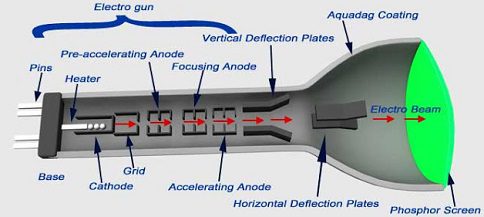
What is Cathode Ray Oscilloscope(CRO):               Cathode Ray Oscilloscope is a very useful and versatile laboratory instrument used for display, measurement and analysis of waveforms and other phenomena in electrical and electronic circuits.CRO’s are in fact very fast X-Y plotters, displaying an input signal versus another signal versus time. Cathode … Read more
Ratings of Circuit Breaker | Making & Breaking Capacity

Circuit Breaker Ratings:              In this, you will learn ratings of circuit breaker and making & breaking capacity of circuit breaker.A circuit breaker may be called upon to operate under all conditions.However, major duties are imposed on the circuit breaker when there is a fault on the system in which it … Read more

Static & Dynamic Characteristics of Electrical Measuring Instruments

Characteristics of electrical measuring instruments: The performance characteristics of electrical measuring instruments can be divided into two categories:  1) Static characteristics  2) Dynamic characteristics  1) Static characteristics of Electrical Measuring Instruments:          Some applications involve the measurement of quantities that are either constant or vary slowly with time.Under these circumstances, it is possible … Read more

Working Principle & Types of Circuit Breakers

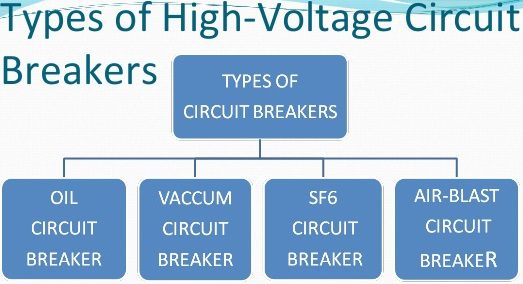
Circuit Breakers:            During the operation of power system, it is often desirable and necessary to switch on or off the various circuits (e.g., transmission lines, distributors, generating plants etc.) under both normal and abnormal conditions. In earlier days, this function used to be performed by a switch and a fuse placed in series with the circuit.However, such … Read more

What is Voltage or Potential Difference ?

What is Voltage?            Voltage is a very important term in electrical engineering.It is similar to force in general physics.Here this force moves some object.In electrical this force is called electromotive force which drives the electrons that is the current flow.This voltage is also called as electric pressure or potential difference … Read more

Auto Transformer – Construction & Working

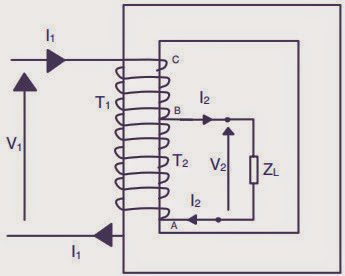
Auto Transformer:              Now we let us discuss autotransformer which is a special case of Transformers and why   do we use auto transformer.The primary and secondary windings of a two winding transformer have induced emf in them due to a common mutual flux and hence are in phase.The currents drawn by these … Read more

Losses in Transformers & Efficiency in Transformers

Losses in Transformers:         We all know that all machines have losses.Similarly, a Transformer also has some losses called transformer losses.Its losses are almost similar to that of d.c. machines except transformers do not have mechanical losses because all of its parts are stationary(no moving parts). So all losses in transformer are … Read more

What is Control Systems & Types of Control systems

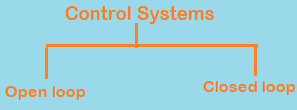
What is Control System?           Let us study about a new type of engineering study which is called as Control Systems Engineering.It’s very interesting subject and has a lot of calculation part.Control system theory evolved as an engineering discipline and due to the universality of the principles involved, it is extended … Read more

Ideal Transformer | Elementary Theory of Ideal Transformer

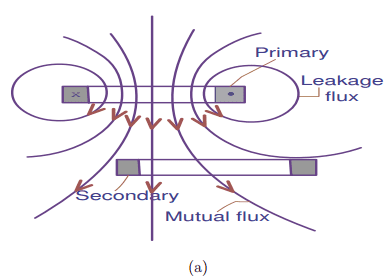
Ideal Transformer:          Now we have already discussed much Transformers and types of transformers.Now we are going to know how the transformer is its ideal condition that is about the ideal transformer. Ideal Transformer Definition:          A transformer which has no losses like eddy current losses, hysteresis losses, copper losses, … Read more

Different types of Transformers – Shell and Core type Transformer

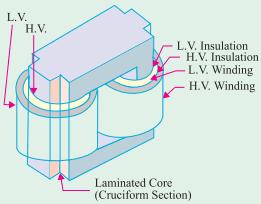
Types of Transformers:      We have already discussed transformers, working on transformers and transformer construction. Now we will discuss different types of transformers.                 Transformers are classified into several types based on   (i) Primary and Secondary coils arrangement around the core  (ii) Phases  (iii) Voltage level       … Read more