A practical specification workflow for engineers and buyers of portable mining power cables.
Contributed by TEBAOFLEX
A replacement cable can match the old cable’s voltage and conductor size yet still be unsuitable for the machine. The missing detail may be phase shielding, a ground-check conductor, the way the cable bends on a reel, or the dimensions needed at a coupler. For engineers and buyers, the aim is not to find the toughest-looking cable. It is to match the complete cable construction to the electrical circuit, operating movement and installation. The following workflow turns a broad request for mining cable into a specification that suppliers can review and quote against.
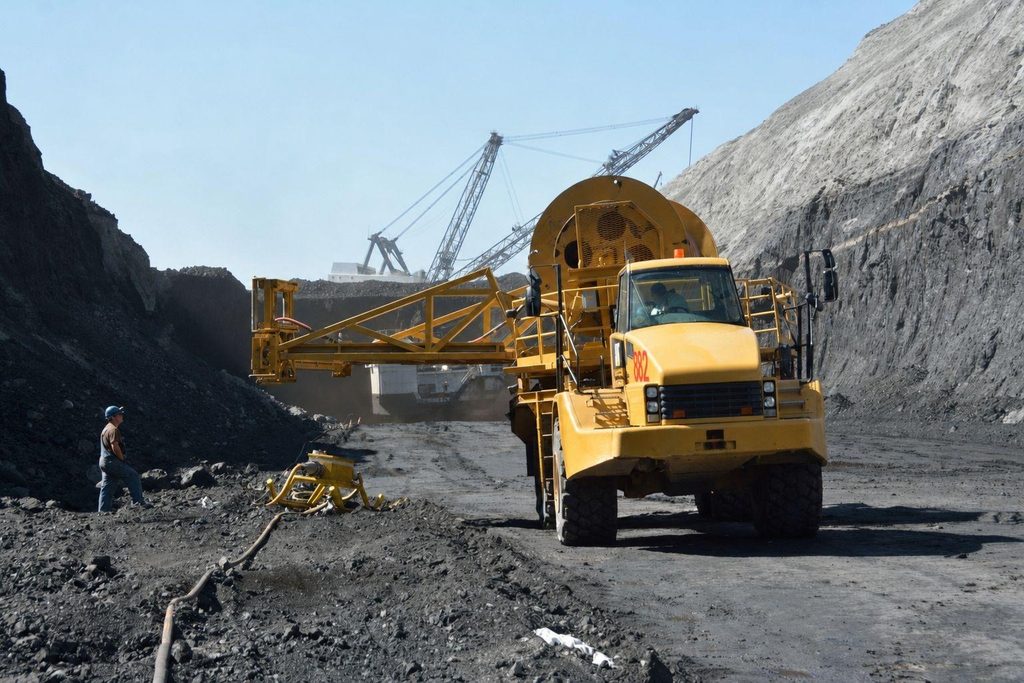
1. Define the movement, not just the machine
A drill, shovel or conveyor name is only the starting point. Explain whether the cable stays on a supported route, is repositioned occasionally, trails with the equipment, or repeatedly winds onto a powered drum. WorkSafe Western Australia distinguishes reeling cables designed for repeated drum operation from trailing cables designed to move with mobile apparatus. That mechanical distinction is useful beyond the jurisdiction in which the guidance was issued. [1]
For trailing duty, describe ground contact, pulling, irregular bends, cable handling and vehicle crossings. For powered reeling, provide drum-core and flange diameters, usable drum width, number of layers, travel, speed, acceleration, tension and any twisting. Include guides and sheaves: the tightest or most heavily loaded bend may be away from the drum. A static bend-radius figure is not evidence that the cable is suitable for continuous reeling. [2]
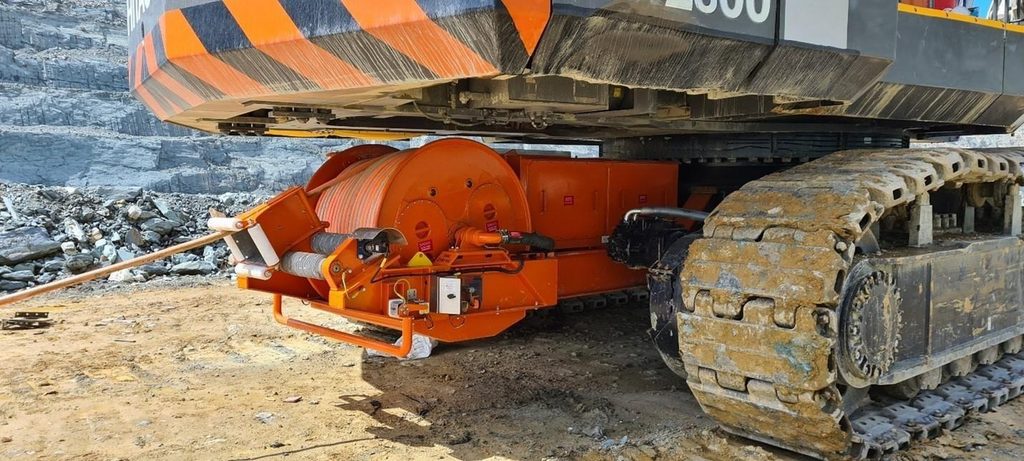
A route sketch is more useful than the word ‘flexible.’ Mark where movement occurs and where damage has previously appeared. When two suppliers propose different constructions, ask each to explain how its offer addresses those same points.
For a broader view of available cable families, readers can review the mining and tunneling cable range, then compare each option with the movement and electrical requirements of the equipment. A category listing is a starting point, not a substitute for an order-specific engineering review.
2. Make three separate electrical checks
Record nominal and maximum system voltage, phase arrangement, grounding method, continuous load, starting method and circuit length. Where the specification uses U0/U, retain the complete designation: U0 is conductor-to-earth or screen voltage, while U is conductor-to-conductor voltage. Do not translate different rating systems by comparing only the largest number. [7]
Ampacity. Check how much current the selected construction can carry under the actual installation conditions. Reference tables depend on assumptions such as ambient temperature, grouping and the method of installation. State how much cable remains on the reel during operation, and obtain a rating for that arrangement rather than applying a free-air value without review. A 90°C conductor rating is not permission to operate the entire installation at a 90°C ambient temperature. [2,3]
Voltage drop. Use the full circuit length, load, conductor resistance at operating temperature, reactance and power factor as applicable. Assess motor starting separately from normal running, including upstream supply impedance. An adequate continuous-current rating does not guarantee acceptable voltage at the machine during starting. [3]
Fault withstand and protection. Check the prospective fault current, clearing time and the cable’s thermal withstand against the protective device. The phase conductors, grounding path and any screen intended to carry fault current need appropriate assessment. Record the accepted calculation basis so that a later substitution is not approved on conductor size alone. [3,7]
3. Separate shielding, grounding and ground check
These functions belong on separate lines of the cable schedule. Grounding conductors form the equipment-grounding path. A ground-check conductor serves the monitoring circuit; it is not a replacement for the grounding conductors. Monitoring requires compatible equipment, connections and a termination arrangement. For example, Littelfuse’s SE-134C/SE-135 documentation describes ground-conductor monitoring together with ground-fault protection. A pilot wire inside the cable does not, by itself, provide those protective functions. [4]
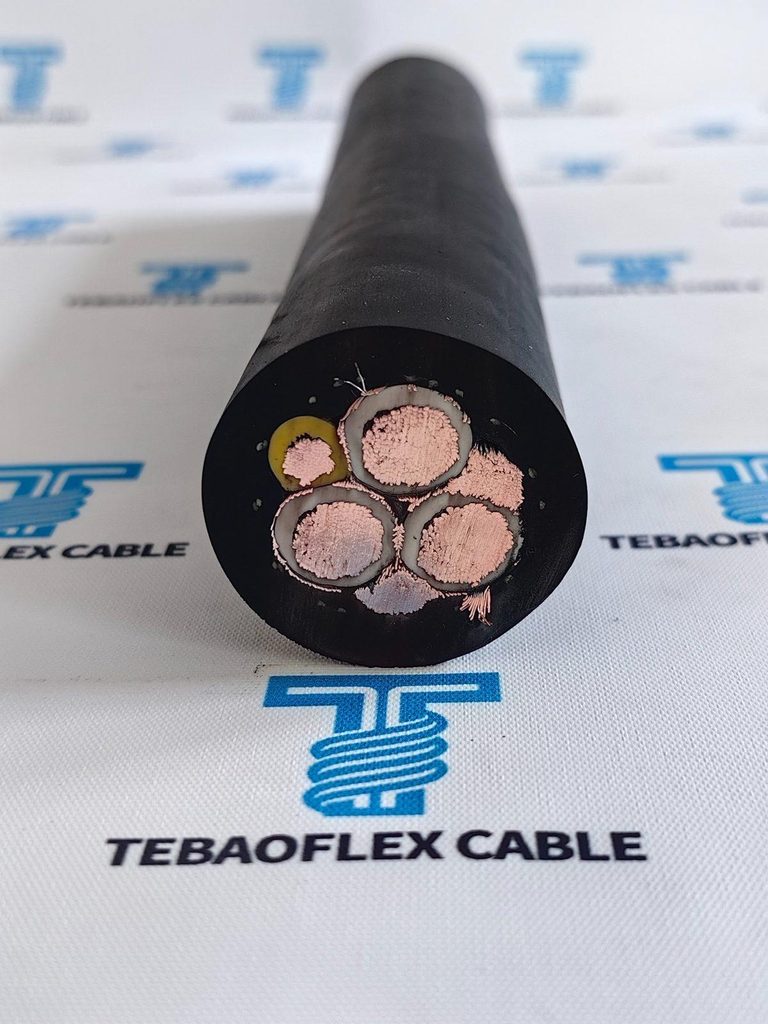
Shielding is a further construction requirement. For screened power cables, check the specified conductor screens, insulation screens, metallic shielding and termination method. Do not treat a shield as mechanical armor or assume that a ground-check conductor means the phase cores are shielded. [5,7]
This is why SHD-GC and Type G-GC should not be treated as interchangeable simply because both names contain GC. Type G-GC is a 2 kV portable-power construction with grounding and ground-check conductors, but it is not the same phase-shielded construction as SHD-GC. Nor should a Type W designation be assumed to include a dedicated ground-check conductor. The selected drawing and protection scheme must agree. [5]
For a concrete construction reference, the TEBAOFLEX SHD-GC mining cable product data describes three flexible tinned-copper power conductors, EPR insulation, shielding, grounding conductors and a separate insulated ground-check conductor. The family lists 2, 5, 8, 15 and 25 kV versions, with CPE or project-specified TPU jackets. These are different voltage-specific builds, not one cable rated interchangeably for every application. Conductor sizes, insulation thicknesses, dimensions and approval scope must be confirmed for the proposed order. [6]
4. Specify the exposure and check the physical fit
Replace ‘harsh environment’ with a description of the actual exposure. For example, a route with sharp rock and repeated dragging presents different jacket questions from a pump connection subject to water exposure. Identify abrasion, impact, oils or chemicals, sunlight, temperatures, and the duration and nature of water contact. Where conditions occur together, say so. Jacket material names alone do not establish suitability or service life. [7]
TEBAOFLEX’s SHD-GC information presents CPE and TPU as construction options for review, not as a blanket performance guarantee. Request the relevant test evidence for the offered compound and complete cable. A general water-resistance description should not be read as approval for continuous immersion under unspecified conditions. [6]
Check outside diameter, mass and dimensional tolerances against the reel, guides, gland, coupler and strain relief. The same phase-conductor area can be packaged in a different overall construction, so a replacement can require more space or different termination components. Obtain confirmation of the operating bend and tension limits for the offered cable, not a similar-looking catalog item. [2,7]
5. Test the proposal with a replacement scenario
Assume a mine is replacing a shielded cable on a 5 kV machine. A quote matches the voltage, phase-conductor size and ordered length. Those three matches are not yet enough to release the purchase.
First, compare the grounding and ground-check arrangement with the existing protection system. Next, check the new diameter against the coupler and the actual moving bends. Then compare the jacket and handling limits with the failure location recorded by maintenance. If the machine has been moved to a longer route or a different reel, send the revised conditions for a fresh review.
The outcome may be an accepted like-for-like cable, a revised construction, or changes to the handling system. The useful result is a documented decision, not an unsupported ‘equivalent’ label. This example shows how the preceding checks work together; it does not select a conductor size or approve a particular installation.
6. Send an RFQ that makes offers comparable
A concise request for quotation (RFQ) should identify both the application and the evidence needed for acceptance. The following schedule can accompany the existing cable marking, route sketch, equipment information and any mandatory owner specification. Use one revision for every bidder.
| RFQ item | Information to provide or request |
|---|---|
| Equipment and route | Machine, location, circuit length, cable length per drum and the reason for replacement. |
| Electrical design | Complete voltage designation, phase count, load and starting data, fault duty and protection requirements. |
| Conductor functions | Power cores, screens, grounding conductors, ground-check conductor and any separate control functions. |
| Movement and interfaces | Trailing or reeling cycle, drum/guide geometry, tension, diameter limits, couplers and strain relief. |
| Environment | Temperature, abrasion, water exposure, oils/chemicals and the required test evidence. |
| Acceptance documents | Order-specific data sheet, drawing, standard and edition, required approvals, test records and marking. |
Keep three questions separate: what standard is specified, what construction is being offered, and what certification or mine acceptance is required. The ICEA S-75-381 / NEMA mining-cable standard family covers portable and power-feeder cables for mines and similar applications. Naming a standard does not, by itself, prove third-party approval of an individual product. Verify the required edition and evidence before ordering. [8]
Where MSHA, CSA or another approval is required, obtain documents and marking details that cover the exact offered construction. Do not extend an approval for one voltage, size or jacket to an entire product family. Treat any alternative as a documented technical deviation for the responsible engineer or authority to accept. [5,6]
Before shipment, agree which electrical test records, dimensional checks, drum lengths and identification details will accompany the cable. Preserve the approved data-sheet revision with the purchase order. This gives receiving inspection a defined basis for checking the delivered product instead of relying on a generic catalog description.
Conclusion
Selecting mining cable is a coordination task: the circuit, protection system, cable construction and handling equipment must work together. Start with the operating duty, complete the electrical checks, then verify the interfaces and acceptance evidence. A clear specification makes quotations easier to compare and gives the buyer a stronger basis for judging a proposed replacement than voltage, conductor size and price alone.
Engineering scope: This article is a selection and procurement aid, not an installation, repair or protection-setting procedure. Final sizing, suitability and approval require review by the responsible qualified engineer under the applicable project and local requirements.
About the contributor
This article was contributed by TEBAOFLEX. Visit the company website for its industrial cable range and contact information.
References
[1] WorkSafe Western Australia. Electricity: Trailing and reeling cables. Updated 6 May 2025.
[2] TEBAOFLEX. Reeling Cable vs Trailing Cable: Mining Selection Guide.
[3] Schneider Electric. Electrical Installation Guide: General method for cable sizing; Calculation of voltage drop in steady load conditions; Verification of the withstand capabilities of cables under short-circuit conditions.
[4] Littelfuse. SE-134C/SE-135 series: Ground-Fault Ground-Check Monitor product documentation.
[5] TEBAOFLEX. Mining Cable Selection: SHD-GC vs Type G-GC vs Type W; Type G-GC Cable 2000V Portable Mining Power Cable.
[6] TEBAOFLEX. SHD-GC Cable 2kV-25kV Mining Power Cable: product specifications and order-documentation scope.
[7] TEBAOFLEX. Medium Voltage Mining Cable Selection Guide.
[8] ANSI Webstore. Portable and Power Feeder Cables for Use in Mines and Similar Applications: ICEA S-75-381 / NEMA standard record.